
Self Employed Personal Assistants.
We look at all aspects of utilising the services of a self employed PA (who may also call themselves private carers / care worker).
What does it mean when someone says they are a self employed PA?
A self employed PA will be working alone to provide assistance/care services.
They will be running their private care business as a ‘sole trader’ under their own terms and conditions, fees etc – just like a care agency but with some very important differences which you should be aware of.
Some self employed people call themselves carers as they may be unfamiliar with the differences between being a care worker, support worker, care assistant or personal (care) assistant.
You may hear the term Micro Provider – this is where self employed individuals may signpost you to another self employed person to purchase a service from if they can’t work or do all the hours you need. Each person will still be running their own business.
Another thing you might hear about is a PA ‘agency’, introduction, recruitment or carer finding service. These businesses usually charge self employed PAs to be ‘on their books’ and match them up to people looking for someone. These should generally be avoided as many PAs believe they are employed by the sourcing ‘agency’ even though they call themselves self employed to their ‘client’ (you). Fees are usually higher.
How will I know if they are genuinely self employed?
No matter where you find a self employed PA, you will need to self assess the chances that they are genuinely self employed. You could be deemed the employer and could run into trouble and be fined for tax evasion or receive employment law fines if they are ever assessed as not being self employed.
This is one of the risks of buying a service from a self employed person.
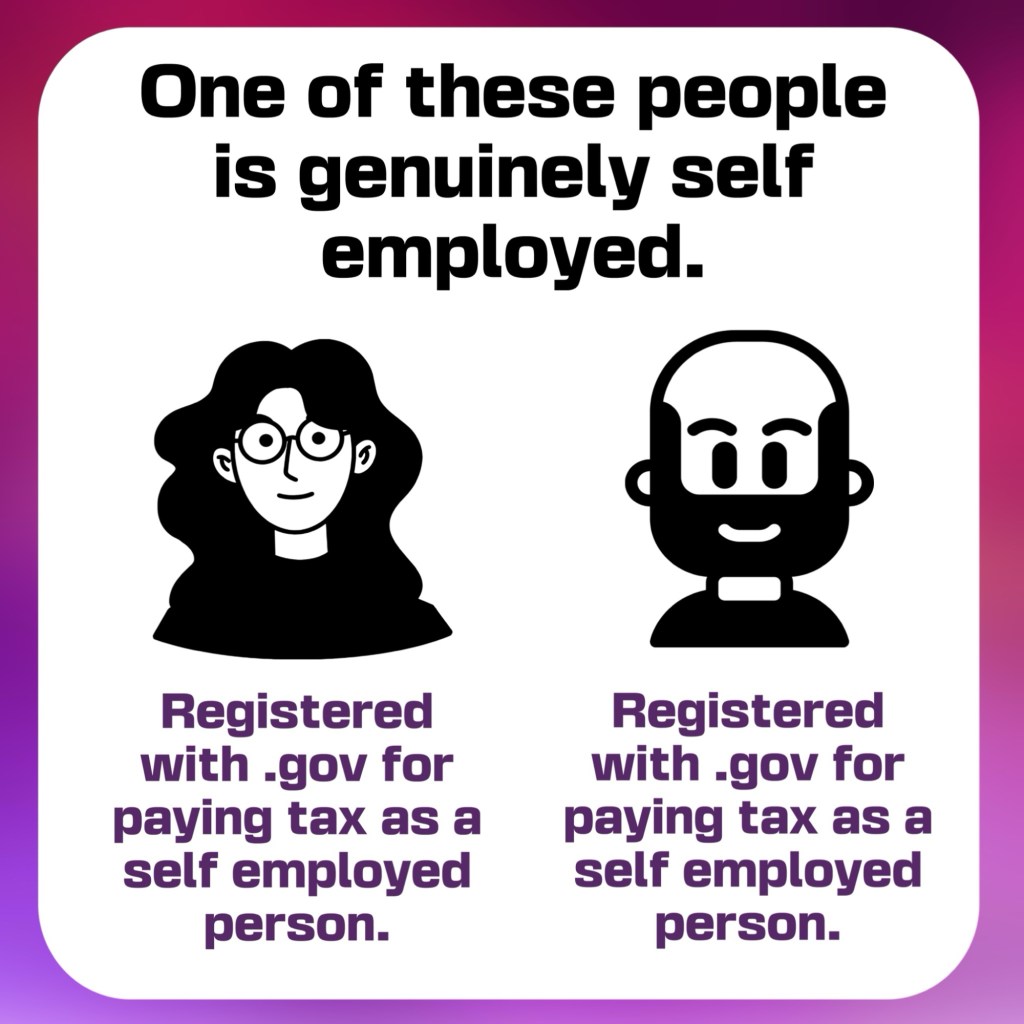
There is no specific way to know if the person is legally classed as self employed (whether they work in care or any other profession).
There are a number of things that will point to self employment – and checking these things is about as far as you can go.
Self employment status is defined by, and for, tax laws and not employment laws.
A person who is told by HMRC (Government tax office) that they aren’t self employed will look at you as being their employer (so the tax laws will then apply to you ).

Tax
If a problem arises when they submit tax payments to the government, HMRC (tax office) will assess the person themselves to see if they showed the characteristics of being a self employed care worker (using their criteria). They make the final decision.
If HMRC say they are not self employed as a carer/PA, you will be deemed the legal employer of that PA and have to back pay tax etc as an employer. This has happened to disabled people or their families.
At that point they are now an employee of yours – so they can take a case to a Tribunal about unfair work conditions , termination and other employment rights. Insurance claims may also say you were the employer.
I have worked with a number of people who needed care who have had this happen to them.
Employment Law
Separately, if a problem arises that relates to issues outside of tax (accidents, insurance claims, , misconduct, abuse, pay disputes and work conditions etc) they could claim to be your employee and possibly go to an Employment Tribunal (a special type of UK government legal hearing for employment issues). This is unusual but has occurred in the past.
Only the Tribunal can assess the evidence and determine if they were self employed or if you were in fact the employer.

A person who comes from a sourcing or introduction agency may be told by the agency they are self employed … but this doesn’t always mean they are. Many self employed PAs have found out the hard way.
Checking self employment indicators.
It is very important to know that a contract of service (or service agreement) or a tax reference number (UTR) is NOT something that’s says for sure that the person is legally self employed. This is the most common misunderstanding by government funders, PAs and people who use their services.
It is even possible to think you are employing them – yet HMRC say they need to pay self employment taxes.
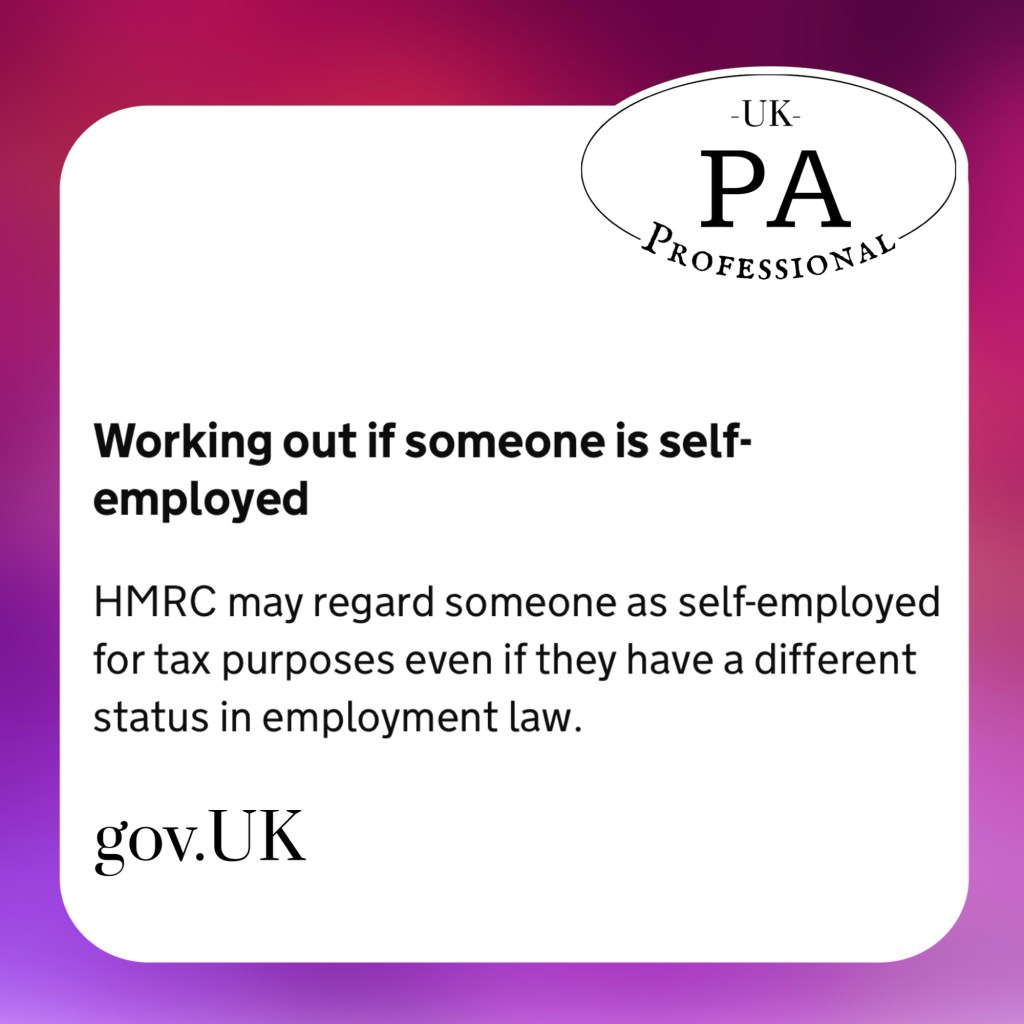
A unique tax number (UTR) just says they are paying tax according to the self assessed tax rules for self employed people – which may be right or wrong.
A tax number is just one indication they may be self employed. Other indicators will be looked at including whether:
- They present a contract of service or service agreement to you (to sign) to agree to their terms and conditions and services. Are they in control of what they do and when?
- They have set their fees. You can’t tell them how much you will pay.
- They pay for all their business costs (travel, PPE provision, insurance, criminal record checks, work clothes, training etc)
- They work to their choice of hours and availability (and can decline services to anyone they choose).
- They take days off of their choosing – not yours.
- They purchase their own food if living-in and must not pay you ‘rent’ or contribute towards utilities. If they do there is a chance this could impact benefit assessments, be classed as taxable income or they may be able to claim ‘squatters’ rights.
- If they are off work they may ask other self employed people if they can cover them ( known as the right to substitute) – but they can’t employ people to cover their absence or they will be classed as a care agency and must then be registered and inspected (a few agency managers are self employed). You may have to find your own cover / fill in if they can’t work. They would then be a business company and not a self employed business. They are two separate legal entities.
- You evaluate service reviews / ratings or customer evaluations which they give you and can have a conversation about what they can provide (to decide whether to buy their services or not ). You don’t take part in interviewing them or see references. Interviewing self employed PAs indicates you are selecting suitable people based on your terms and requirements – which can make you the employer.
These things should help you decide if you can be confident of their self employed status.
There are a real mixture of people working as self employed PAs. These range from abusers (eg in 2025 a night time PA was charging an extra £20+ each time the person needed the toilet to deliberately stop them requesting toilet access) to very positive experiences.
Is this option right for me and the amount of control I will have over what they can do, when, where and how?
The most control (hours, pay, what they do for you, when and how) will only come from employing your own PA. Without a doubt, employing a PA is the optimum for flexibility, choice, and control over day to day assistance.
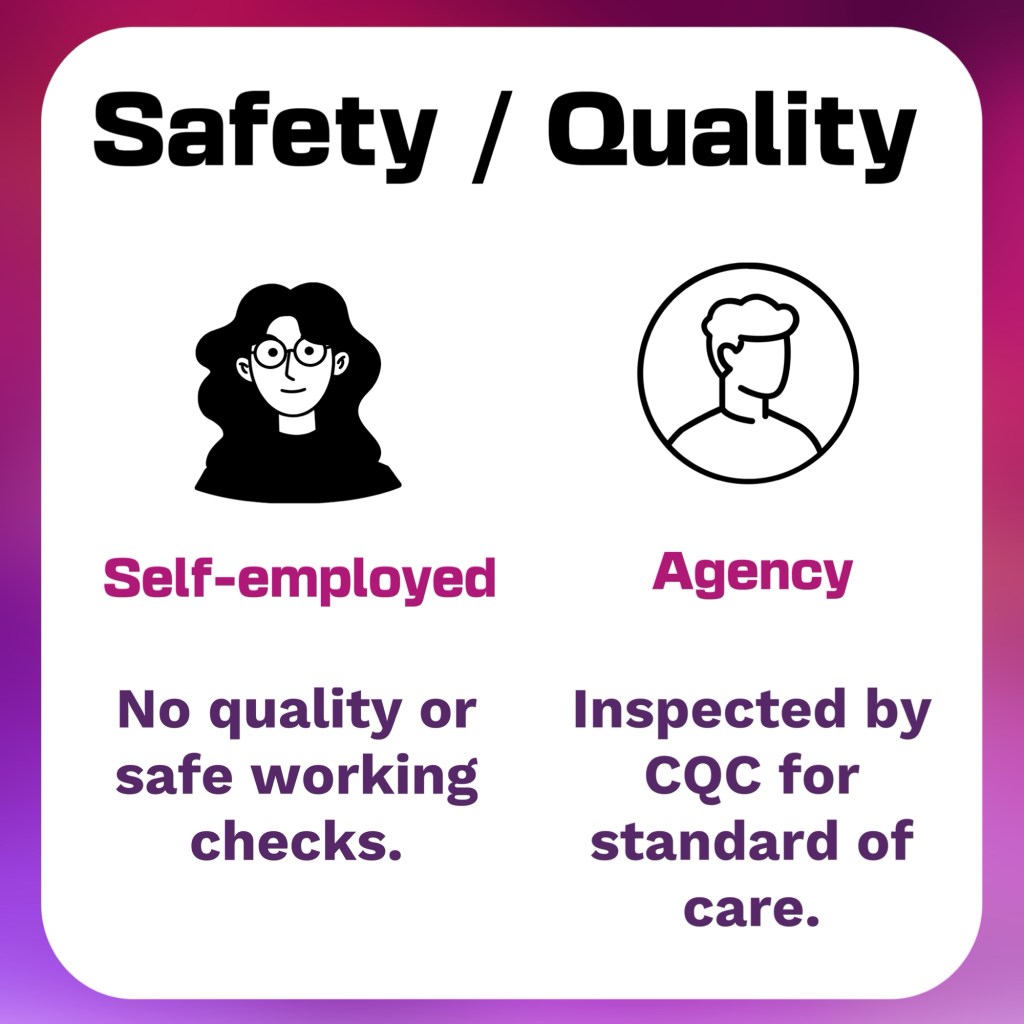
However, being an employer is not something everyone wants to do and thus a business service needs to be bought in – either a Care Quality Commission (CQC) registered care agency or un-registered self employed PA (unless in Scotland where PAs have to register they are doing PA work).
A self employed PA should work to high standards of professionalism, and find out what they need to be doing, during their time with you – and aim to respect the way you like things done and respect your property.
They should understand care plans and how to follow them if necessary.
They should maintain confidentiality, your dignity, follow data protection laws, health and social care provision legislation and work in a none discriminatory fashion.
They should have taken training to make and keep care notes if this is a requirement because the person they support has varying capacity or their funders require it.
They can refuse to do tasks not in their service contract which they agreed with you (so less flexibility on the range of tasks). They choose their own standards to which they do the tasks (which may not be as high as you like or be too much!).
It is their business so their rules apply.
They will only have self employment workers rights – you (as their client) must ensure their safety when they work and not discriminate against them. [ACAS, 2025].
What are the benefits and disadvantages?
The benefit of using a self employed PA is that:
- you don’t need to recruit or interview them,
- you don’t write a contract or have to do terms and conditions
- you don’t have to discipline them or have performance related conversations if they are not doing things how you want (although you may have to use their business’s complaints procedure if you are not happy).
- You can stop using them at any time and change to another business as long as you give any agreed notice in the contract they gave you.
- They can often start immediately.
- You don’t run a payroll or need a payroll company.
The negatives
The downside is that you are restricted to their terms and conditions (as to what they will assist with etc) and the times they can support – so a degree of flexibility and control is lost.
There are no standards of care that a self employed PA has to meet and they are never ‘checked’ (unlike a care agency who has to be registered with the Care Quality Standards Commission) and be inspected.

There are no set minimum qualifications needed to become a self employed PA – and you can’t really check out their certificates (you won’t know if they actually did a course or if the certificate was faked) and they may not regularly update training. It will be up to you to assess their validity.
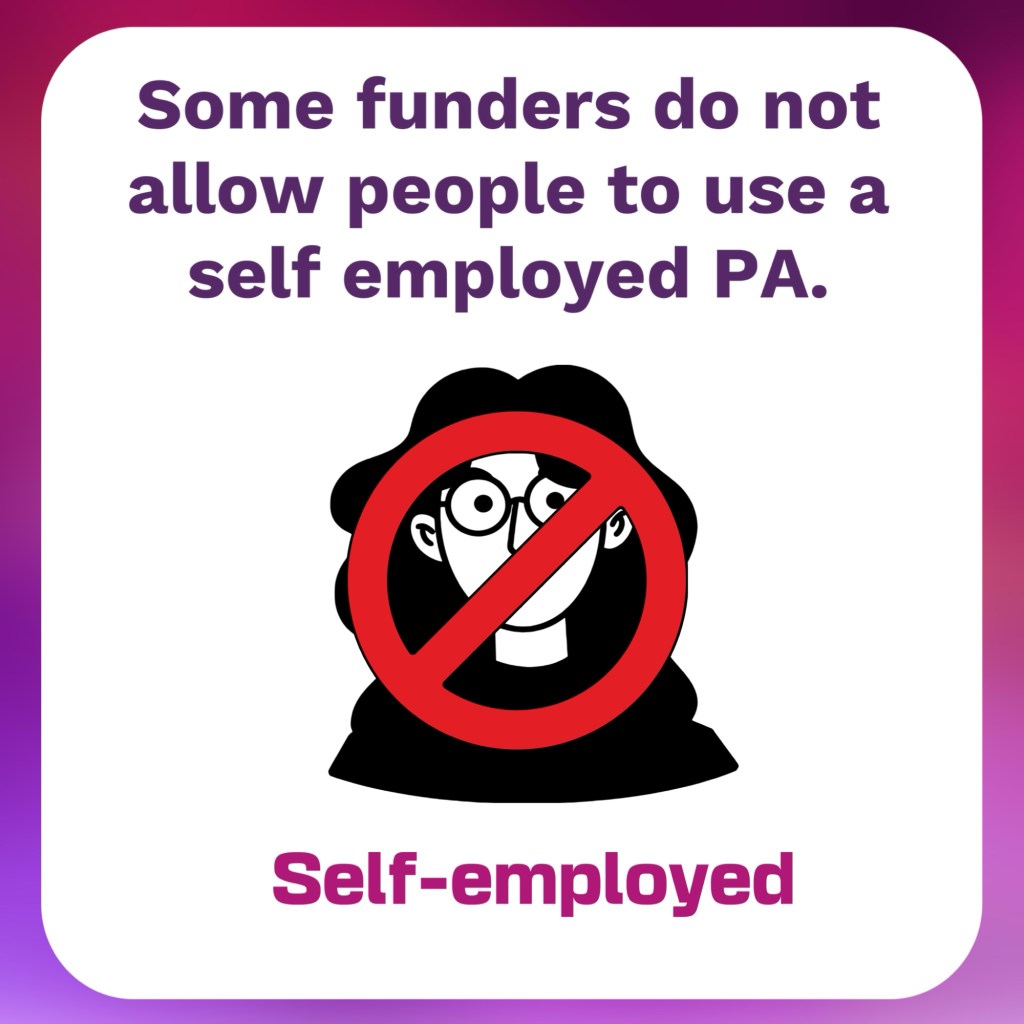
If you are funded by Direct Payments (either from the council or NHS) you may not be allowed to use a self employed PA. Each area has their own rules about this. This is usually due to high fees and safety reasons.

Fees may be very high (£25 upwards per hour for basic assistance compared to £12-15 for an employed PA doing the same work) and can triple on public holidays.
You have no control over what they may charge and they can increase fees whenever they choose. There may be cancellation fees or extra fees if they go over their allotted time with you. You will need to check their terms and conditions carefully so you can pay their invoices. In this way, it is no different to using a care agency – or may even be more expensive.
Is it safe to trust someone who is self employed for my/loved one’s care?
It is worth noting that the NHS information portal suggest that people only use an agency or employer their own PA (self employed PAs are not recognised as an option possibly due to safety issues). More about NHS information for home care.
We have seen many take their adverts off social media after complaints and client verbal abuse issues – but they could still be working and advertising elsewhere.
You can never be sure references or training certificates are not made up but you can see their DBS paperwork (Disclosure service to log criminal convictions and anyone barred from working with vulnerable people) for recent convictions. Only an Enhanced DBS check will show ‘spent’ convictions. Some funders will insists on an enhanced check – and self employed PAs must be a member of specific organisations to apply for this which will cost them (so many don’t get Enhanced DBS checks)
Self employed PAs are never assessed against any quality of care standards.
Never pay cash or pay in advance or pay for anything not agreed in your signed service agreement.
The best advice would be to analyse their promotional materials and social media content to assess the way they do business (see below). Read their terms and conditions very carefully, ensure they have a good complaints procedure and ask to see copies of all training certificates, driver’s licence if needed, insurance and DBS documents (noting expiry dates so you can re check).
If they are taking you in their car make sure you see their business car insurance covers passengers (not just an insurance for goods deliveries) and check their road driving experience.
If they are transporting equipment such as frames or wheelchairs – are they inured for damage to these items when assisting you or loading them into a car?
Check whether you need someone with medical insurance – PA specific insurance should be held by them and if you use a hoist, have a medical needs (have a PEG, ventilation etc)it should cover medical needs specifically. Read their insurance details carefully.
How do I find someone?
- Social media eg Facebook groups for PAs or local community group,
- local community notice boards/news magazines,
- social media searches,
- Internet Search,
- PA searchable websites (usually charged for),
- your local direct payment or independent living support services may have a database, word of mouth.
Choosing someone
It’s advisable to avoid PAs who don’t give an initial good impression. Here are some real life examples from 2024/5 which we show PAs to help them professionalise their business.

This sound like someone professional … however, this is text book and very generic. There is nothing here that tells you about this individual – it could easily have been AI generated and may well have been.
They might be worth finding out more about but they are not putting the ‘personal’ into assistant! You don’t know what areas they work or types of tasks they can do or level of qualifications.
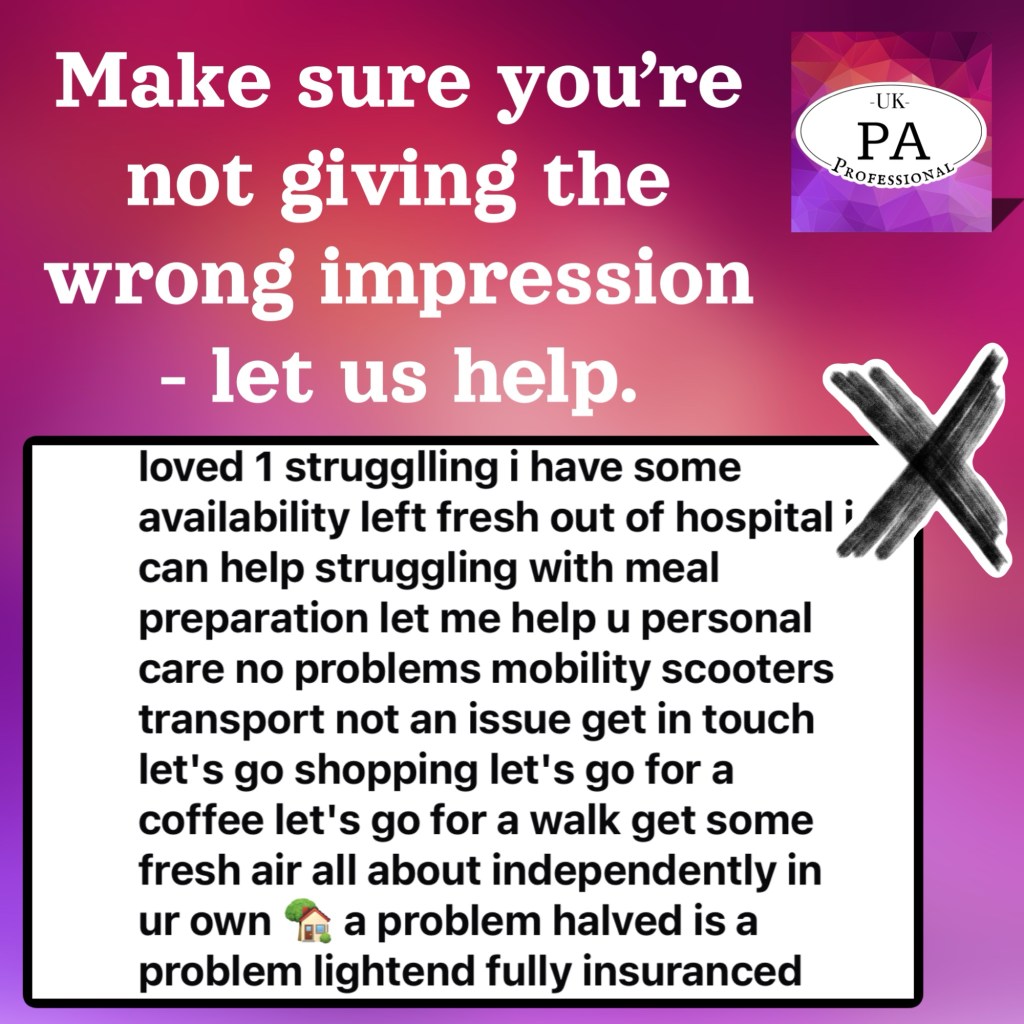
This is has a big red flag. Using shorthand ‘text’ speak, poor demonstration of language skills and no grammar (11 lines of text with no sentences and an emoji etc) tells us this person is a poor communicator.
(Care agencies have minimum requirements for maths and language / writing skills).
They are giving the impression that they may not be able to create a legal contract of services with you. They are unlikely to be able to write clear care notes and may have poor communication with other healthcare professionals or have difficulty invoicing you. First impressions count – this one has missed the mark.
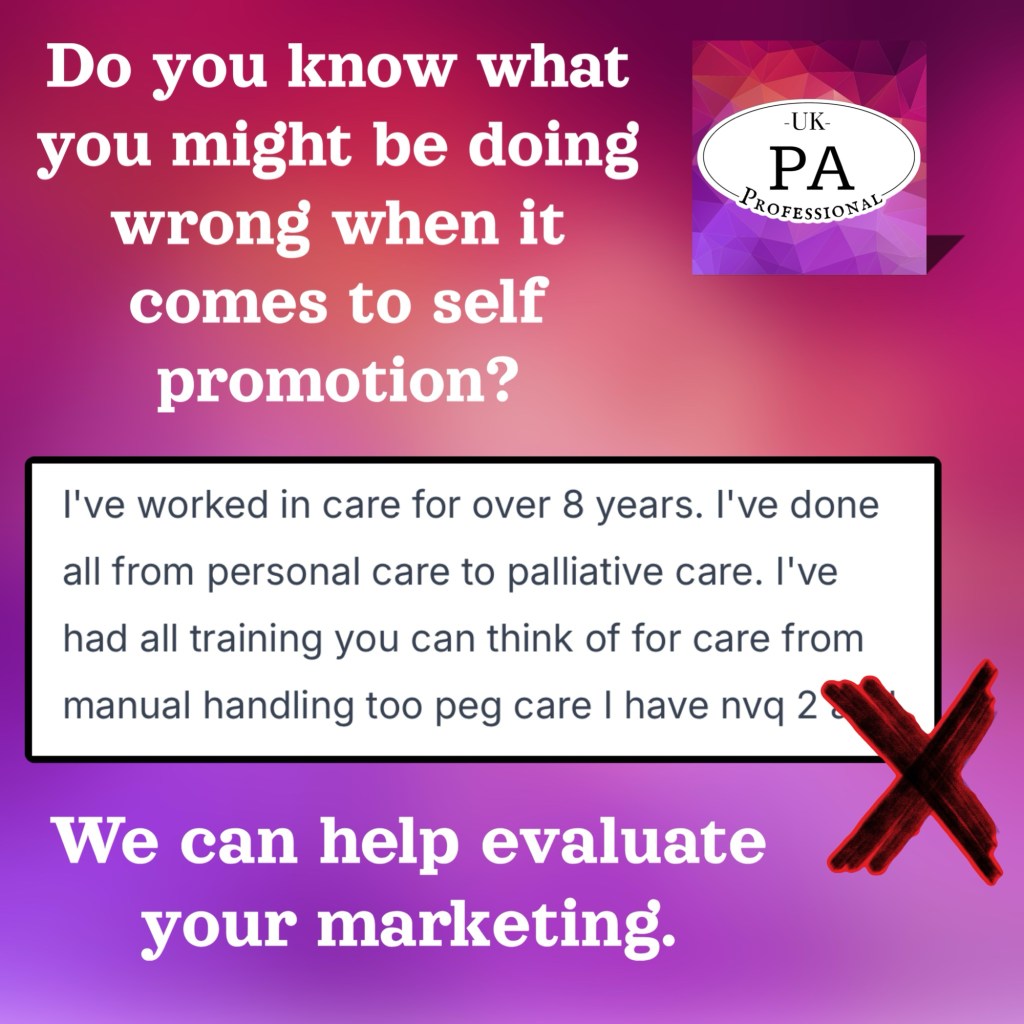
The warning signs here are ‘I’ve done it all’ and ‘I’ve had all the training you can think of “. They are saying they don’t need to learn anything new or update knowledge. They are giving the impression they know it all. They may be rigid in their care approach and not understand individual needs or adapt to doing things differently. Their written language skills are not as clear as they should be for care work.
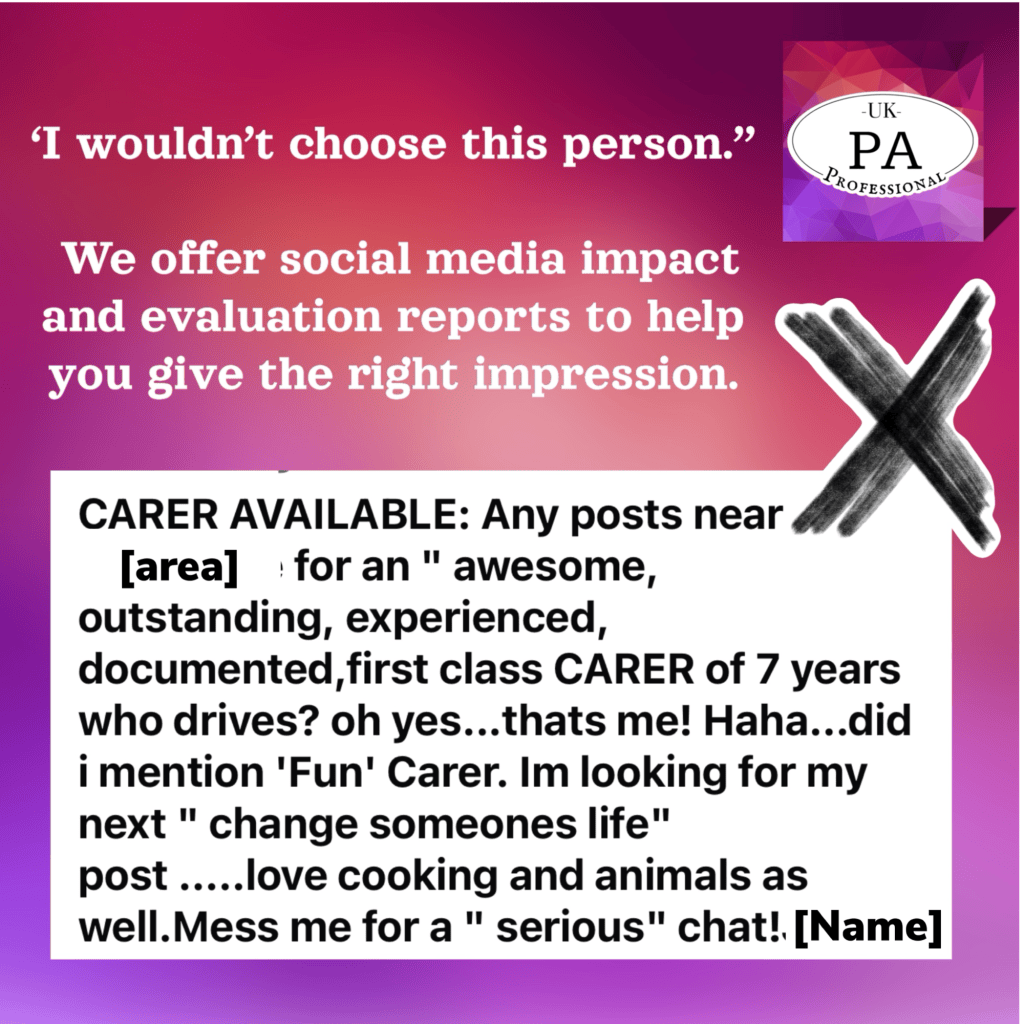
Someone said “I wouldn’t choose this person”. Their advert describes themselves as awesome, outstanding, documented (whatever that means) and first class. They say they are “fun” and you can “mess” them for a serious chat.
This is very informal and doesn’t mention the critical things like: are they insured, do they have a DBS check or qualifications or what sort of specialisms do they have eg have they assisted people with your type of impairment?
Have they done personal care or what days or hours do they work?
You are going to be doing all the hard work to find out! You need to be able to easily rule them in or out – and this advert tells you very little.
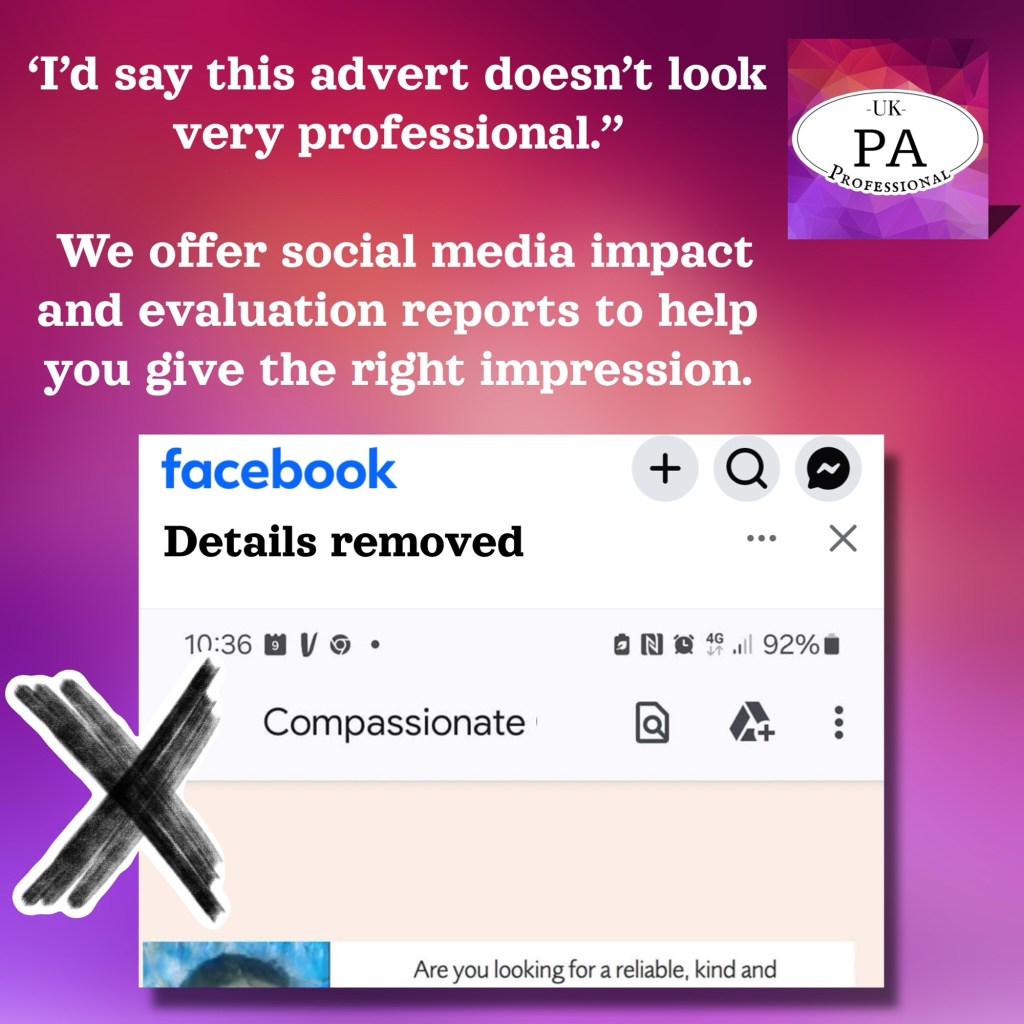
This person screen shot digital media (their flyer, probably in Dropbox ) to repost in a Facebook group. This tells us they didn’t have the skills to download the actual flyer nor tidy up the screen shot to remove their phone details. Whilst computer literacy may not be a requirement to be a PA – they should present their business in a good light.
A self employed PAs will have to be able to use a computer to write invoices, use business banking, make flyers, schedule calls and write care notes possibly … someone with low computer literacy may well have a muddled business and struggle with self employment. If they muddle up their business records you could have a poor experience.
How do I pay them?
They should invoice you with an itemised list of services/costs and a total amount to pay (and ways to pay it).
Their business address (home address) and a reference number will be on their paperwork and a date to pay by.
The invoice should have details about how to pay eg their business bank account and sort code.
Ask to see an invoice sample to check they know what they are doing. If you are funded by the council or NHS they will need to see evidence of proper invoices with these details on.
What if things go wrong?
Ensure they have a formal complaints procedure so that if you are not happy with the service, you can tell them in writing according to their procedure.
You can stop using their services at any time if things aren’t resolved – but check they don’t have terms and conditions where you have to pay a cancellation fee or have to give them some notice.
If you feel you are being taken advantage of or abused in any way, cancel the service and please seek help and tell someone.
How do I know I’m not being overcharged or taken advantage of financially?
Never pay in advance for services and check cancellation notice periods.
Assess prices by looking for other people in your area who provide self employed PA services. What do they charge for a similar level of care?
How much do local agencies charge clients / advertise staff pay rates for? If 5 local agencies charge £14 an hour and the self employed person charges £25 – then this is a red flag (assuming the complexity of care is comparable).
Be aware that basic homecare services will cost you a lot less than if you have complex care needs and need a highly qualified PA with PA medical insurance.
Leisure: PAs may need their admission/activity fees paid by you – check their terms and conditions.
Food: You should not pay for their food or drinks when they are at work.
Joining In: You should not pay for them to do an activity eg if you went to a craft workshop. They are there to assist you with an activity and not participate.
If you go somewhere where they have to pay admission eg going swimming together, they should be able to claim their admission fee as a business related expense (although HMRC can be variable on this depending on who you speak to).
What if they refuse to do something?
They are within their right to refuse to do something if the task is not part of your care plan or agreed between you in the service contract you have with them.
If your care plan says “help getting washed” and your service contract with them is vague, they could say a sink wash is enough and not help with a bath or shower. Be careful how service contracts/agreements are worded!
What hidden costs might I incur.
There shouldn’t be any.
All charges, and the conditions in which they would be payable, should be clearly in the service contract/agreement. If they charge extras you should refuse to pay. This is an easy way to be financially abused.
A critical hidden cost might be if you suddenly go into hospital. They may charge you full rates because you can’t give enough warning to cancel. If you want them to keep your hours free (for when you get discharged) they may charge up to 75% of the weekly hours you purchased. A more reasonable rate would be 50% as a retainer fee but this is up to them.
Is it legal – could I be deemed an employer?
Yes, there is always this chance but if you ensure you have checked out the factors that point to self employment, you can be more confident that this is less likely to happen.

